
Time travel sounds like something out of a science fiction novel, movie, or bizarre theory. In actuality, though, life is much weirder than fiction.
Science has found evidence that suggests time may not be as rigid as we believe, even if only slightly. You will seriously doubt what you know after learning some of these facts.
Let’s explore some of the most bizarre, bizarre, and true time travel facts that could make your head spin.
- The higher you go, the slower time goes.
This is true physics, as demonstrated by Einstein and repeatedly tested.
Time actually moves a little bit more quickly for you than it does for someone on the ground if you are standing atop a towering building.
You won’t age considerably more quickly, so don’t get too thrilled, but it’s already crazy that time alters with height.
- Without realising it, astronauts are “time travellers.”
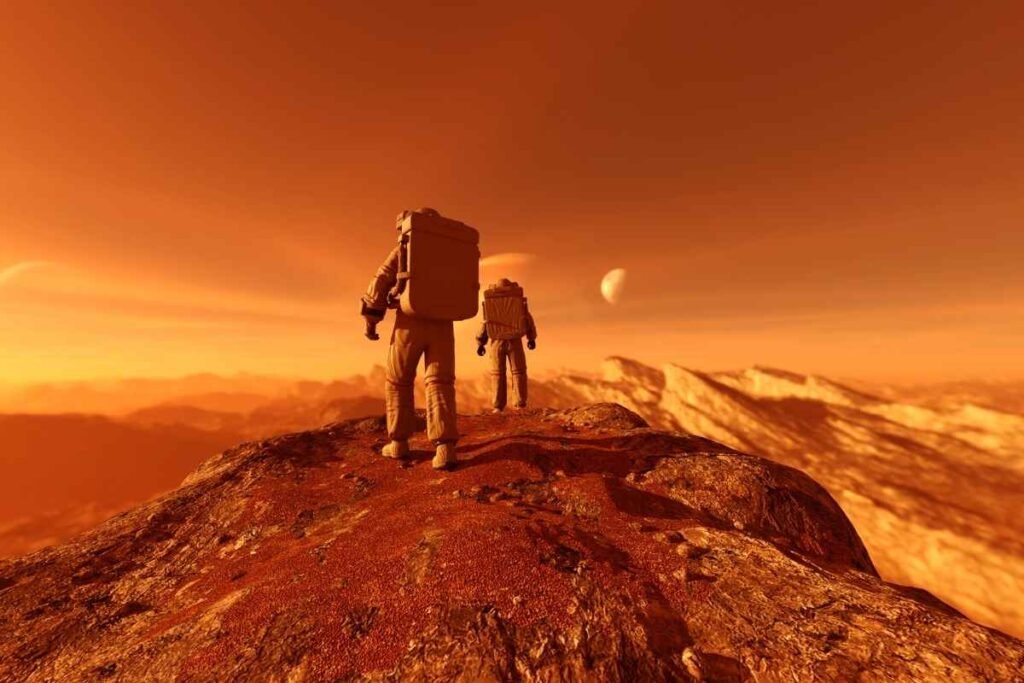
The speed at which astronauts on the International Space Station orbit the Earth is astounding. For them, time slows down as a result (thanks again, Einstein).
They have therefore technically aged a few milliseconds less than those on Earth when they return.
Time is not fixed; a small deviation has a significant impact.
- Time Can Be Bent by Gravity
Time goes more slowly when gravity is stronger.
In other words, time moves more slowly in close proximity to a planet, star, or black hole than it does in space.
For this reason, some scientists think that locations close to black holes have the ability to “pull” you into the past or future.
- In 2008, a Man’s Memory Startled Researchers

Akira Haraguchi is a man who committed 111,700 Pi numbers to memory.
He claimed to be able to “step outside the present moment” when he concentrated intensely.
Although it isn’t actual time travel, the human mind has a strong capacity to alter how it perceives time.
- It Is Totally Possible to Travel Through Time to the Future
This is science, not fiction.
When one travels close to the speed of light, time is drastically slowed.
You might return to Earth after five years of interstellar travel at nearly the speed of light and discover that everyone else has been gone for more than fifty years.
Greetings, future!
- Quantum Physics Indicates Constantly Occurring Tiny Time Jumps
In quantum experiments, particles act as though they present simultaneously in multiple times.
Some people are like miniature time travellers, jumping positions suddenly and skipping moments.
Thus, on the simplest levels, nature itself manipulates time.
- A “Time Slip” in Real Life Was Reported in Liverpool

Many people have reported that they “pop back” to the present in a matter of seconds after unexpectedly entering streets that appeared to be from the 1960s, complete with shops, automobiles, clothes, and other items.
A hallucination? A portal? A timeline in parallel?
The accounts are uncannily identical, but no one knows.
- It’s Possible That Black Holes Are Natural Time Machines
Time slows down almost completely within a black hole.
If we are able to survive entering one, some scientists believe that wormholes, or space tunnels, related to black holes may enable travel between times or universes.
It’s a big “if,” but it’s still astounding.
- A Russian Scientist Says He Has a Future Photo
A tiny device created by a man by the name of Vadim Chernobrov is said to have changed time by fractions of a second.
He later published a picture claiming it was taken in the future.
Conspiracy theorists believe him, but scientists don’t.
- Time May Not Even Exist
According to some physicists, time is merely a mental construct used to interpret events.
If that’s accurate… Therefore, it’s possible that the past, present, and future all exist simultaneously.
Thus, “time travel” can simply mean discovering new moments.
Time Is Not What You Believe
Regardless of your belief in time travel, one thing is certain: time is far more bizarre and adaptable than it first appears.
Depending on where you are and how quickly you are moving, it bends, stretches, slows, and accelerates.
Time travel is already possible in a sense—you do it every second.
Perhaps “Is time travel possible” isn’t the true question.
However, “How far can we go?”